ErecPower Ingredients: The Nine Names on the Label
ErecPower contains nine named ingredients: two minerals and seven botanicals.
They are magnesium, zinc, Tribulus Terrestris, chrysin, Epimedium, Tongkat Ali, saw palmetto berries, Chinese hawthorn berries and winged treebine, all named on the label.
Next, read how the formula is meant to work.
The honest part first. Without published doses, nobody can tell you whether any ingredient here reaches the amount used in the studies below — and the studies matter, because the difference between a researched dose of zinc or Tongkat Ali and a trace of it is the difference between an effect and a label decoration. Anyone shopping on dose transparency will find this frustrating, and they are not wrong to. What follows is every ingredient with the real evidence attached, including the two we think are weak.
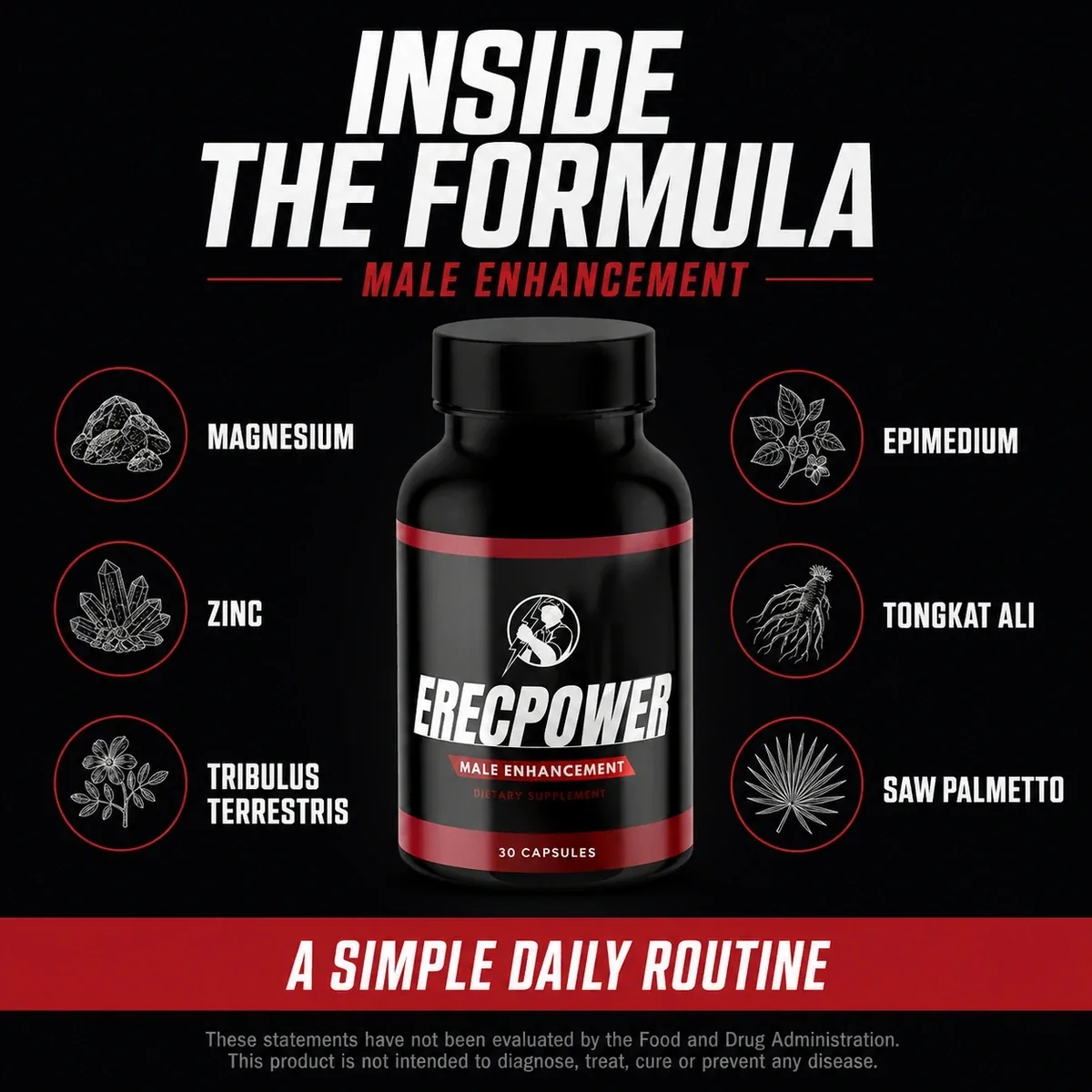
Every ErecPower ingredient explained
Grouped by what the formula asks each one to do. Where the evidence is thin, this page says so rather than filling the gap with adjectives.
Magnesium
Not publishedEssential mineral · Mineral
One of two minerals on the panel and one of the most common shortfalls in the ordinary American diet. Magnesium is a cofactor in hundreds of enzyme reactions, including those governing muscle function, nerve signalling and energy metabolism. Evidence: the mineral itself is thoroughly characterised — the NIH Office of Dietary Supplements maintains the reference intakes and the deficiency picture. What is not established is that adding magnesium does anything for vitality in a man who is already replete, and this website will not claim it does.
Sources: NIH Office of Dietary Supplements
Zinc
Not publishedEssential mineral · Mineral
The mineral with the clearest link to male hormonal health — and the clearest caveat. Evidence: a 2023 systematic review of the zinc–testosterone relationship, and older work on dietary zinc restriction (Prasad 1996), both point the same way: zinc deficiency lowers testosterone, and correcting a deficiency raises it. The caveat that matters: men who are already zinc-sufficient see little to no testosterone benefit from extra zinc. So this ingredient helps if you were short of it and does close to nothing if you were not. NIH also sets the tolerable upper intake at 40 mg a day — worth knowing if you take a separate zinc supplement alongside this one.
Sources: 2023 systematic review · Prasad 1996 · NIH Office of Dietary Supplements
Tribulus Terrestris
Not publishedPuncture vine · Botanical
A thirty-year fixture of men’s supplements, marketed hard on testosterone since the 1990s. Evidence: this is the weakest item on the panel and we would rather say so than not. A 2025 systematic review in Nutrients of clinical trials found eight of ten studies reported no significant change in androgen profile and concluded there is no robust evidence tribulus raises testosterone. A prospective trial found no significant difference in total or free testosterone, LH or semen parameters after treatment. Some trials do report improvements in self-reported sexual function, which appear to run through a route other than testosterone. Treat any testosterone claim about this herb — here or anywhere — with scepticism.
Sources: 2025 systematic review in Nutrients · prospective trial in men
Chrysin
Not publishedFlavonoid · Botanical
A flavone found in passionflower, honey and propolis, included in men’s formulas because laboratory work shows it inhibits aromatase, the enzyme that converts testosterone to oestrogen. Evidence: the aromatase activity is real in a test tube. The problem is oral bioavailability — chrysin is very poorly absorbed, and human studies have generally failed to show the hormonal changes the laboratory work suggests. There is no strong public human trial record to link you to, and rather than dress up a weak source, we point at NCCIH on how to read botanical evidence of this kind. Read chrysin as a traditional inclusion, not a proven active.
Sources: NCCIH
Epimedium
Not publishedHorny goat weed · Botanical
The classical herb of this category, used in Chinese medicine for centuries. Its principal active is icariin, a flavonoid studied on the nitric-oxide signalling pathway that governs blood flow. Evidence: laboratory and animal work (Shindel 2010, J Sex Med) describes icariin as a weak PDE5 inhibitor — orders of magnitude less potent than prescription PDE5 drugs — alongside effects on endothelial nitric oxide synthase. Controlled human data remain limited. MedlinePlus carries the consumer summary and the interaction list. Caution: may interact with blood thinners and blood pressure medication.
Sources: Shindel 2010, J Sex Med · MedlinePlus
Tongkat Ali
Not publishedEurycoma longifolia · Botanical
A Southeast Asian root, and after zinc the best-supported item on this panel. Evidence: a 2022 systematic review and meta-analysis of clinical trials pooled five randomised controlled trials and found a significant increase in total testosterone with Eurycoma longifolia supplementation, with the clearest effect in men who were hypogonadal to begin with. Trials typically use standardised root extracts around 200 mg a day over months, not weeks. The same caveat as zinc applies: the effect is strongest in men who were low, and the reviewers themselves call for more research before treating it as settled.
Saw Palmetto berries
Not publishedSerenoa repens · Botanical
Best known for prostate and urinary support in older men rather than for vitality as such, which is the honest reason it sits on a men’s panel. Evidence: NCCIH summarises a large but genuinely mixed trial literature — several well-conducted studies found saw palmetto no better than placebo for urinary symptoms. Caution: saw palmetto has hormonal activity and can interact with anticoagulants and with hormone-related medicines. If you take either, or you are being treated for a prostate condition, speak to your clinician before starting.
Sources: NCCIH
Chinese Hawthorn berries
Not publishedCrataegus pinnatifida · Botanical
A traditional cardiovascular tonic, included here for circulation rather than for hormones. Evidence: NCCIH covers the hawthorn literature, most of which concerns heart failure symptoms rather than healthy adults, and it flags the interactions clearly. Caution: hawthorn can interact with heart and blood pressure medication. This is one of the reasons the medication warning on this website is not boilerplate.
Sources: NCCIH
Winged Treebine
Not publishedCissus quadrangularis · Botanical
A climbing vine used in Ayurvedic medicine, most often studied for bone and joint support and, more recently, for body composition. Its presence on a men’s vitality panel is traditional rather than evidence-led. Evidence: thin in humans, and we could not point you at a robust public trial record that would justify a vitality claim. NCCIH sets out how to weigh a botanical in that position. Read it as a supporting inclusion.
Sources: NCCIH
Reading a panel with no published doses
Some labels print a proprietary blend total, which at least gives you a ceiling. ErecPower prints neither individual amounts nor a blend total, which means the only honest thing to say is that the amounts are unknown.
That does not make the product fake — the ingredients are named, the lot is published and the certificate is checkable. It does mean you should discount any claim that leans on a specific study dose, including the studies cited on this page. Those studies tell you what an ingredient can do at a known intake. They do not tell you what is in this capsule.
The two conclusions that survive that caveat: zinc and Tongkat Ali are the ingredients most likely to be doing something if the doses are meaningful, and tribulus is unlikely to be doing what the category usually claims for it at any dose.
Every page, every journal post, the bottle facts and the ingredients go through review by Dr. Kia Mitchell, MD before they ship. We write these pages from the ErecPower label and the manufacturer’s own lot paperwork, cite public nutrient references for every ingredient, and print “not published” wherever a figure is not disclosed rather than estimating it. Corrections are made on the page itself and the review date moves forward — write to [email protected]. Last reviewed September 2026 by Dr. Kia Mitchell, MD.
Ingredient questions
How many milligrams of each ingredient are there?
Not published. The manufacturer names all nine without stating a dose for any of them.
Which ingredient has the best evidence?
Zinc and Tongkat Ali. Zinc has a clear relationship with testosterone in men who are deficient; Tongkat Ali has a pooled meta-analysis of five randomised trials behind it, strongest in men who began low.
Which has the weakest?
Tribulus Terrestris. A 2025 systematic review found eight of ten studies reported no significant change in androgen profile.
Will zinc raise my testosterone?
Only if you were short of zinc to begin with. Men who are already zinc-sufficient see little to no benefit from extra zinc, and that nuance is the whole story with this mineral.
Can these ingredients interact with medication?
Yes. Saw palmetto interacts with anticoagulants and hormone medicines, hawthorn with heart and blood pressure medication, Epimedium with blood thinners, and zinc affects copper absorption at higher intakes. Speak to a pharmacist before starting.
Is ErecPower vegetarian and gluten free?
The label carries gluten-free, dairy-free, non-GMO and vegetarian marks. Always read the bottle you receive.
Nine named ingredients. One capsule a day.
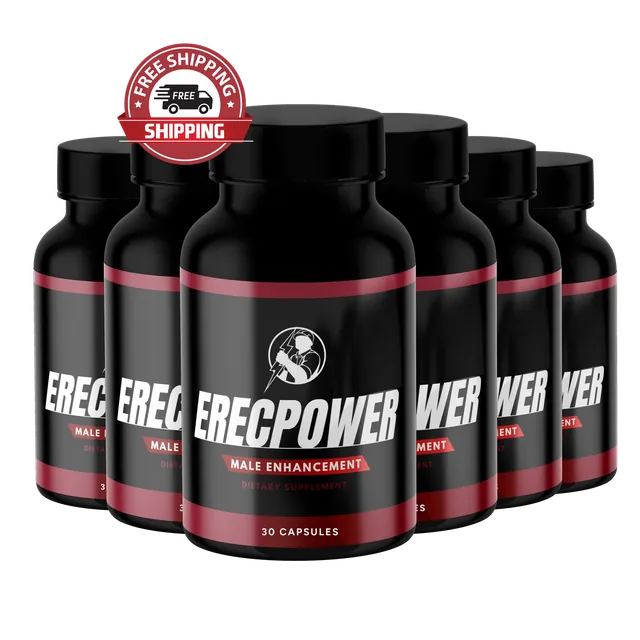
Six bottles at $49 each with free US shipping, and sixty days to change your mind.
$294 — six bottles at $49 each
Order ErecPower On The Official WebsiteFree US shipping · 60-day money-back guarantee · one-time payment · lot EP/NY/2609-7731