ErecPower Official Website › Blog › Tongkat Ali vs Tribulus
Tongkat Ali vs Tribulus Terrestris: What the Trials Actually Show
Both sit on this panel. Both are sold on testosterone. Only one of them has a meta-analysis behind that claim — and it is not the famous one.
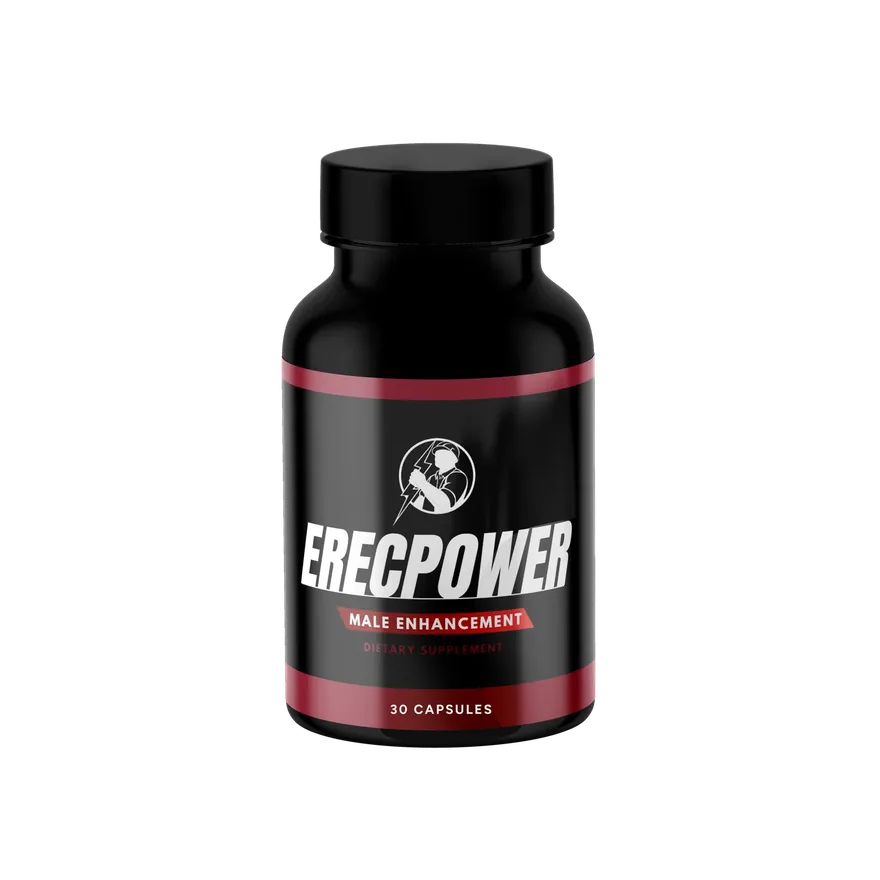
- Tongkat ali has a meta-analysis of randomized trials reporting a significant rise in total testosterone — strongest in men who were low to begin with.
- Tribulus terrestris has a review in which eight of ten trials found no significant change in androgen profile.
- Tribulus is not useless — some trials report better self-reported sexual function — but that appears to run through a route other than testosterone.
- Both are on this label, and we would rather tell you which is which than let the ingredient count do the talking.
Side by side
| Tongkat Ali | Tribulus Terrestris | |
|---|---|---|
| Best evidence | Meta-analysis of 5 randomized controlled trials | Review of clinical trials |
| Testosterone finding | Significant increase | No significant change in 8 of 10 trials |
| Strongest in | Men who were hypogonadal at baseline | — |
| Typical trial dose | ~200 mg standardized extract daily | Varies widely between trials |
| Trial length | Months, not weeks | Weeks to months |
| Amount in ErecPower | Not published | Not published |
Tongkat ali: the better case
A meta-analysis of clinical trials pooled five randomized controlled trials and found a significant increase in total testosterone with Eurycoma longifolia supplementation. The effect was clearest in men who were hypogonadal at the start — the same shape as the zinc finding, and the same caveat.
Two things are worth holding onto. First, trials use standardized root extracts at roughly 200 mg a day, over months rather than weeks. Second, the reviewers themselves call for more research before treating the result as settled. That is a real positive finding with real limits, which is different from either a miracle or a myth.
Tribulus: the weakest item on the panel
Tribulus has been marketed on testosterone since the 1990s and is probably the single most recognizable name in this category. The trial record does not support the reputation.
A review of clinical trials found eight of ten studies reported no significant change in androgen profile, and concluded there is no robust evidence that tribulus raises testosterone. A randomized controlled trial found no significant difference in total or free testosterone, luteinizing hormone, or semen parameters after treatment.
What it may actually do
Some trials do report improvements in self-reported sexual function. Those results exist and we are not dismissing them — but they do not travel through testosterone, so any testosterone claim about this herb, on this website or anywhere else, deserves skepticism. That is exactly how it is written up on our ingredients page.
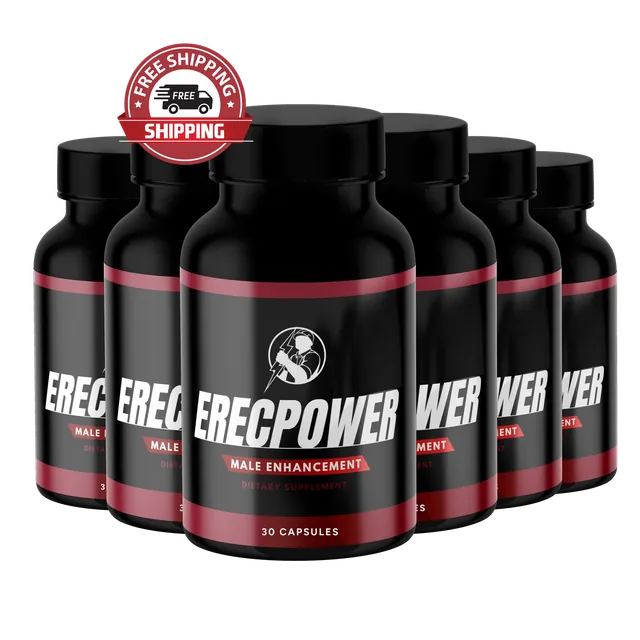
Nine ingredients, ranked honestly.
We print the strong evidence and the weak evidence in the same typeface. If that is how you would rather buy, the six-bottle pack is the lowest per-bottle price we sell.
$294 — six bottles at $49 each
Order On The Official WebsiteFree US shipping · 60-day money-back guarantee · one-time payment
The dose problem both share
Neither ingredient's amount is published on the ErecPower label. That is legal, it is common across the category, and it is a genuine limitation:
- You cannot check tongkat ali against the ~200 mg the trials used.
- You cannot tell whether tribulus is a meaningful inclusion or a name on a list.
- You cannot add either to anything else you take.
NCCIH's guidance on herbal supplements is the best neutral primer on weighing a botanical whose amount you cannot see. Our own take on how to read any label in this category is on the choosing a men's supplement page.
Why tribulus is still on almost every label
An ingredient with a mostly negative trial record should have disappeared from the category twenty years ago. It has not, and the reasons are worth understanding because they apply to more than this one herb.
- Recognition. Buyers look for names they have heard of, and thirty years of marketing has made this one familiar. Familiarity sells better than evidence.
- The early animal work looked promising. Rodent studies suggested effects that human trials then failed to reproduce — an ordinary and unglamorous story that plays out across nutrition research.
- The self-reported findings are real. Some trials do report better self-reported sexual function. That is a legitimate result; it simply is not a testosterone result, and the two get conflated.
- Nobody has to prove it works. A supplement ingredient does not need to clear an efficacy bar before it goes on a label, which the FDA sets out plainly.
None of that makes tribulus harmful or its inclusion dishonest. It makes it a traditional inclusion, and a label that leans on it for a testosterone claim is asking you to accept something its own evidence does not support.
If you wanted to buy either one on its own
A fair question, given the above, and we would rather answer it than pretend a blend is always the right shape.
| What to check | Why |
|---|---|
| A stated dose in milligrams | Without it you cannot compare anything to the trials |
| Standardisation on the extract | “Root extract” alone says nothing about strength |
| A serving size you would actually keep to | Three capsules a day is a different commitment from one |
| A guarantee long enough to judge it | Months, not weeks, for anything in this category |
If you want a studied dose of tongkat ali, a standardised single-ingredient product at roughly 200 mg is the better buy, and saying so costs us a sale we would rather not make dishonestly. What a panel like this one offers instead is breadth at one price, with the minerals doing the most defensible work — which is set out, ingredient by ingredient, on the ingredients page.
And the other seven ingredients?
Focusing on two names risks implying the rest are filler. They are not, but they are uneven, and the honest summary is short.
- Zinc — the best-supported item on the panel, with the deficiency caveat that runs through everything: it corrects a shortfall rather than pushing a normal level higher.
- Magnesium — the same logic one step weaker, and a common enough dietary shortfall to be a reasonable inclusion.
- Epimedium — the classical herb of this category, with laboratory work on the nitric-oxide pathway and limited controlled human data. Carries interaction warnings.
- Chrysin — interesting in a test tube, poorly absorbed when swallowed. Read it as traditional rather than proven.
- Saw palmetto — studied for prostate and urinary symptoms, with a genuinely mixed record, and hormonal activity that makes it worth declaring to a clinician.
- Chinese hawthorn — a cardiovascular tonic, studied mostly in heart failure rather than in healthy adults.
- Winged treebine — Ayurvedic, studied mainly for bone, joint and body composition. Its place on a vitality panel is traditional.
Two strong, two moderate, three traditional. Printing that distribution is more useful than printing the number nine, and each entry is set out at length with its own citations on the ingredients page.
So which matters more?
On the evidence, tongkat ali — comfortably. If you are choosing between single-ingredient products rather than a blend, tongkat ali at a standardized 200 mg has the better case, and we would rather say that than pretend a nine-ingredient panel settles the question.
That verdict comes with a limit worth naming. “Better evidence” means one meta-analysis of five trials whose own authors asked for more research, in a field where replication is thin and the strongest effects showed up in men who were low to begin with. It is the best case on this panel; it is not a settled one. Anyone telling you otherwise — in either direction — is reading more into five trials than five trials can carry.
What a panel like ErecPower's offers instead is breadth: minerals that correct a shortfall, one botanical with a positive meta-analysis, and several traditional inclusions that are honestly thinner. Whether that trade is worth $49 a bottle is a judgement only you can make — with the 60-day guarantee as the backstop.
Four testosterone claims worth distrusting
These phrases appear across the category, and each one has a specific problem.
“Clinically proven to boost testosterone”
Ask which ingredient, at what dose, in whom. If the answer is a trial using more of a single ingredient than the whole product contains, the claim is borrowed rather than earned.
“Naturally raises free testosterone”
Free testosterone is a specific measurement, and the randomised trial on tribulus found no significant difference in it. A claim about a specific measure invites you to check that measure.
“Used for centuries”
True of many ingredients here, and it tells you about tradition rather than effect. Traditional use is a reasonable prompt to study something; it is not a result.
“Doctor formulated”
There is a seal to this effect on this bottle, and the honest reading is that it describes who was involved in designing the formula, not that the finished product was tested. ErecPower has not been the subject of a clinical trial — that sentence is on the testing and quality page and in the footer of every page on this website.
The general test: a claim that names an ingredient, a dose and a population is checkable. A claim that names a feeling is not. NCCIH's guidance on dietary and herbal supplements is the neutral reference for working through any of them.
References
- Leitao AE, et al. Eurycoma longifolia (Jack) improves serum total testosterone in men: a systematic review and meta-analysis of clinical trials. 2022. https://pubmed.ncbi.nlm.nih.gov/36013514/
- Effects of Tribulus (Tribulus terrestris L.) supplementation on erectile dysfunction and testosterone levels in men: a systematic review of clinical trials. Nutrients. 2025. https://pubmed.ncbi.nlm.nih.gov/40219032/
- Prospective analysis on the effect of botanical medicine (Tribulus terrestris) on serum testosterone level and semen parameters in males with unexplained infertility. 2016. https://pubmed.ncbi.nlm.nih.gov/27337519/
- National Center for Complementary and Integrative Health. Dietary and herbal supplements. https://www.nccih.nih.gov/health/dietary-and-herbal-supplements
- U.S. Food and Drug Administration. Questions and answers on dietary supplements. https://www.fda.gov/food/information-consumers-using-dietary-supplements/questions-and-answers-dietary-supplements
Every page, every journal post, the bottle facts and the ingredients go through review by Dr. Kia Mitchell, MD before they ship. We write these pages from the ErecPower label and the manufacturer’s own lot paperwork, cite public nutrient references for every ingredient, and print “not published” wherever a figure is not disclosed rather than estimating it. Corrections are made on the page itself and the review date moves forward — write to [email protected]. Last reviewed September 2026 by Dr. Kia Mitchell, MD.
Evidence first, ingredient count second.
A long panel is easy to print. Telling you which items on it are strong and which are traditional is the part that takes nerve.
$294 — six bottles at $49 each
Order ErecPower On The Official WebsiteFree US shipping · 60-day money-back guarantee · one-time payment · lot EP/NY/2609-7731